
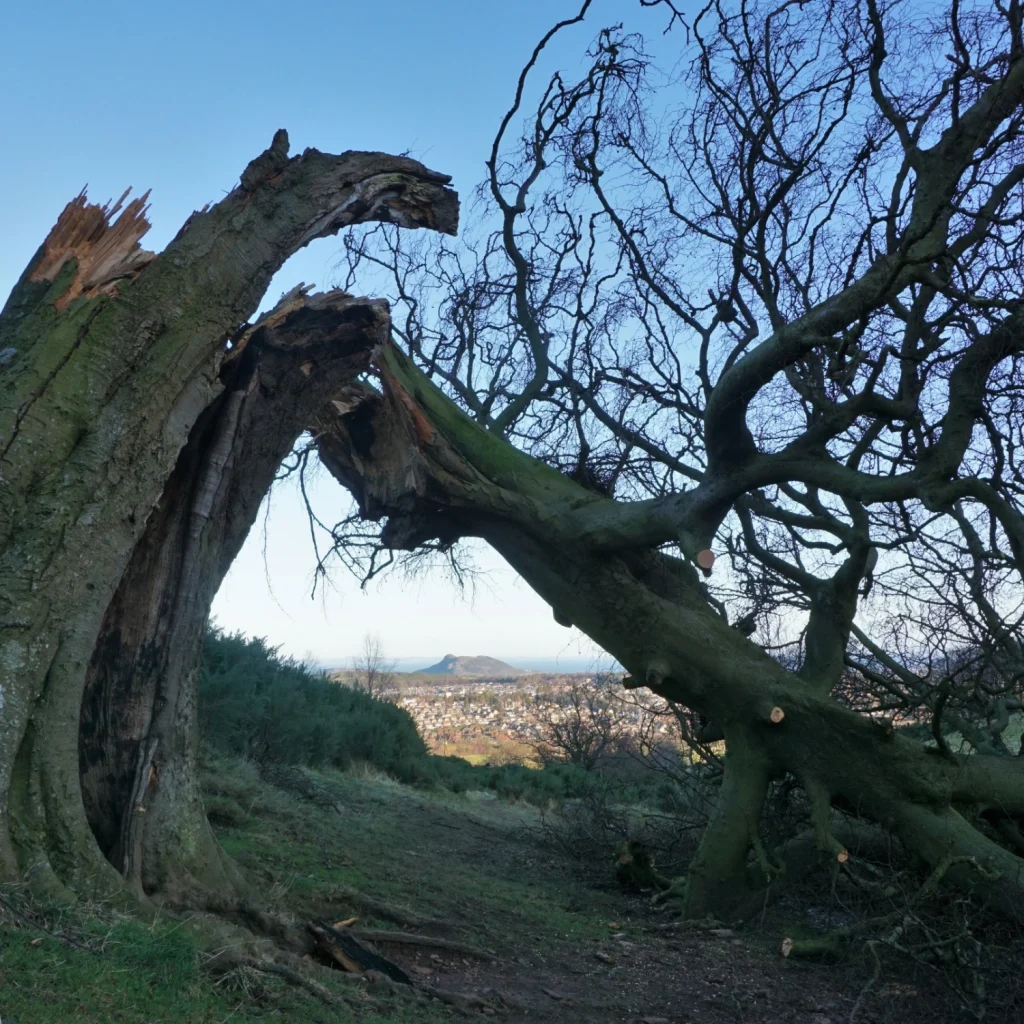
Cork winters can be wild. Between Atlantic storms and saturated ground, it’s no surprise that trees come down every year. Whether in a back garden in Douglas, along a country road in West Cork or across a driveway in Midleton, if it happens to you, knowing what to do (and what not to do) can keep you safe.
Here’s our step-by-step guide.
1. Stay Back and Keep Everyone Safe
Your first priority is people, not property. A fallen tree can look settled, but it may be under huge tension, and it can shift without warning.
- Keep children, pets and neighbours well away from the tree
- Stay indoors if the storm is still in full force, as more branches could be on their way
- Don’t walk or drive under or near other trees that look damaged or leaning
2. Check for Power Lines
This is the big one. If the tree has brought down or is touching an overhead line, treat the line as live and stay at least 10 metres away.
- Never touch the tree, the wires, or anything in contact with them
- Call ESB Networks’ emergency line on 1800 372 999 to report the fault
- If anyone is in immediate danger, ring 112 or 999
Only ESB Networks or qualified professionals should go near a tree that’s in contact with power lines.
3. Is the Tree Blocking a Road or Footpath?
If the tree has fallen across a public road, report it to Cork County Council or Cork City Council (depending on where you are) or to the Gardaí, so the road can be made safe for other drivers. If it’s on your own driveway or private land, you’re free to deal with it, but see the next point before you reach for the chainsaw.
4. Don’t Be Tempted to DIY
We completely understand the urge to get out there and start sawing, but we’d urge you not to. Storm-damaged trees are one of the most dangerous jobs in our trade, and here’s why:
- Trapped tension: Branches and trunks can be bent under pressure. When you cut them, they can spring back violently
- Unstable root plates: A tree that’s partially uprooted can roll or settle unexpectedly
- Hidden hazards: Wet ground, tangled debris and nearby damaged limbs all add risk
- Chainsaw injuries: Tired, cold, wet and rushed is a bad combination with a chainsaw
A professional tree surgeon has the training, equipment and insurance to deal with storm damage safely and efficiently.
5. Call a Qualified Tree Surgeon
Once it’s safe to do so, get a professional in. When you’re choosing someone, look for:
- Proper insurance, including public liability cover
- Recognised qualifications and experience in storm damage work
- Clear communication about what will be done, and a quote up front
- Safe working practices and the right equipment
Be wary of anyone who knocks on your door after a storm offering cheap, same-day work. Unfortunately it happens, and the results aren’t always pretty.
6. Have the Other Trees Checked
One tree coming down is often a sign that others nearby may be at risk, especially after prolonged rain has loosened the soil. Warning signs include:
- Leaning trees, or a lean that seems to be getting worse
- Cracks, splits or hollow areas in the trunk
- Cracked or lifted soil around the base
- Large dead or hanging branches
- Fungal growth at the base of the tree
A professional assessment now could prevent a far more serious problem later.
Can You Prepare Before the Next Storm?
Yes, and it’s well worth doing. Before the worst of the winter weather arrives:
- Have mature trees inspected, particularly those near your house, driveway, shed or power lines
- Remove dead, diseased or weak branches
- Keep an eye on Met Éireann weather warnings and stay clear of trees during Status Orange and Red alerts
Regular maintenance is almost always cheaper than emergency clean-up.
Need Help? We’re Here
If a tree has come down on your property, or you’re worried about one that might, our friendly team is on hand to help. We cover Cork city and county, and we’ll get your property safe and tidy again as quickly as we can.
Get in touch with Cork Tree Surgeons today for advice, an assessment or a no-obligation quote.