In Cork’s damp, mild climate, one particular threat lurks beneath the surface of our gardens, quietly devastating trees and shrubs. Honey fungus might sound harmless, even pleasant, but this aggressive pathogen ranks among the most destructive diseases affecting trees in Irish gardens. At Cork Tree Surgeons, we encounter honey fungus regularly, and understanding this silent killer could save your beloved trees.
The Deceptive Nature of Honey Fungus
What makes honey fungus particularly insidious is its stealthy progression. Trees can appear perfectly healthy for months, even years, whilst the fungus systematically destroys their root systems underground. By the time visible symptoms emerge, yellowing foliage, stunted growth, or sudden collapse, the damage is often irreversible.
The fungus spreads through black, bootlace-like structures called rhizomorphs, which snake through soil seeking new victims. These underground networks can extend several metres, meaning the infection affecting your prize oak might have originated from a diseased stump three gardens away.
Recognising the Warning Signs
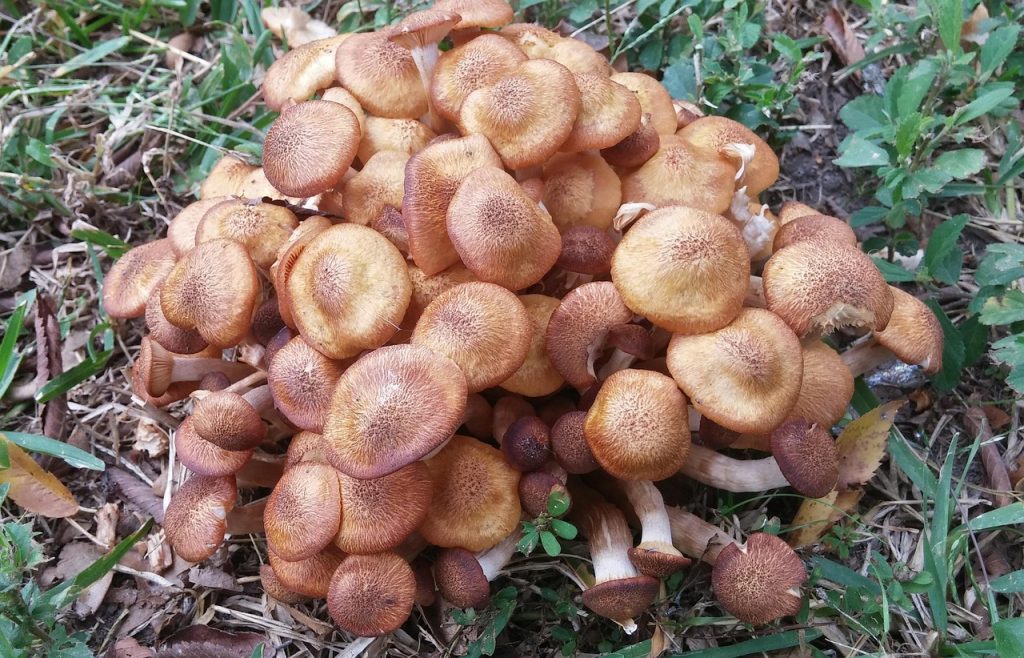
Early detection proves crucial, though challenging. Look for white, fan-shaped fungal growth beneath bark at ground level, a distinctive calling card of honey fungus. The characteristic honey-coloured toadstools typically appear in autumn, clustered around infected tree bases or emerging from nearby soil.
Trees under attack often exhibit stress symptoms: poor leaf colour, reduced growth, and premature autumn colours. However, these signs mirror numerous other problems, making professional diagnosis essential. Cork’s wet summers can accelerate the disease, whilst stressed trees, those affected by drought, construction damage, or poor soil, prove particularly susceptible.
The Devastating Impact
Once established, honey fungus shows little mercy. It attacks both deciduous and evergreen species, though some prove more vulnerable than others. Birches, willows, and fruit trees often succumb quickly, whilst others like beech and oak may resist longer. The fungus doesn’t discriminate by age, ancient trees and young saplings face equal threat.
Perhaps most frustratingly, honey fungus continues thriving in dead wood and stumps for decades. Removing infected trees without addressing root systems and surrounding soil often proves futile, as the pathogen simply bides its time before attacking replacement plantings.
Professional Assessment and Management
Effective honey fungus management requires expert knowledge and specialised techniques. At Cork Tree Surgeons, we can identify suspicious symptoms, confirm diagnoses, and develop comprehensive treatment strategies. This might involve careful excavation around root systems, soil treatment, or strategic replanting with resistant species.
The battle against honey fungus demands patience, expertise, and often significant intervention. However, with proper professional guidance, you can protect remaining trees and successfully establish new plantings.
If you suspect honey fungus in your Cork garden, don’t delay seeking professional advice. Contact Cork Tree Surgeons for thorough assessment and effective management strategies.